
A Practical Guide for Procurement: Selecting Hydraulic Balers Based on Material Type and Industry Standards
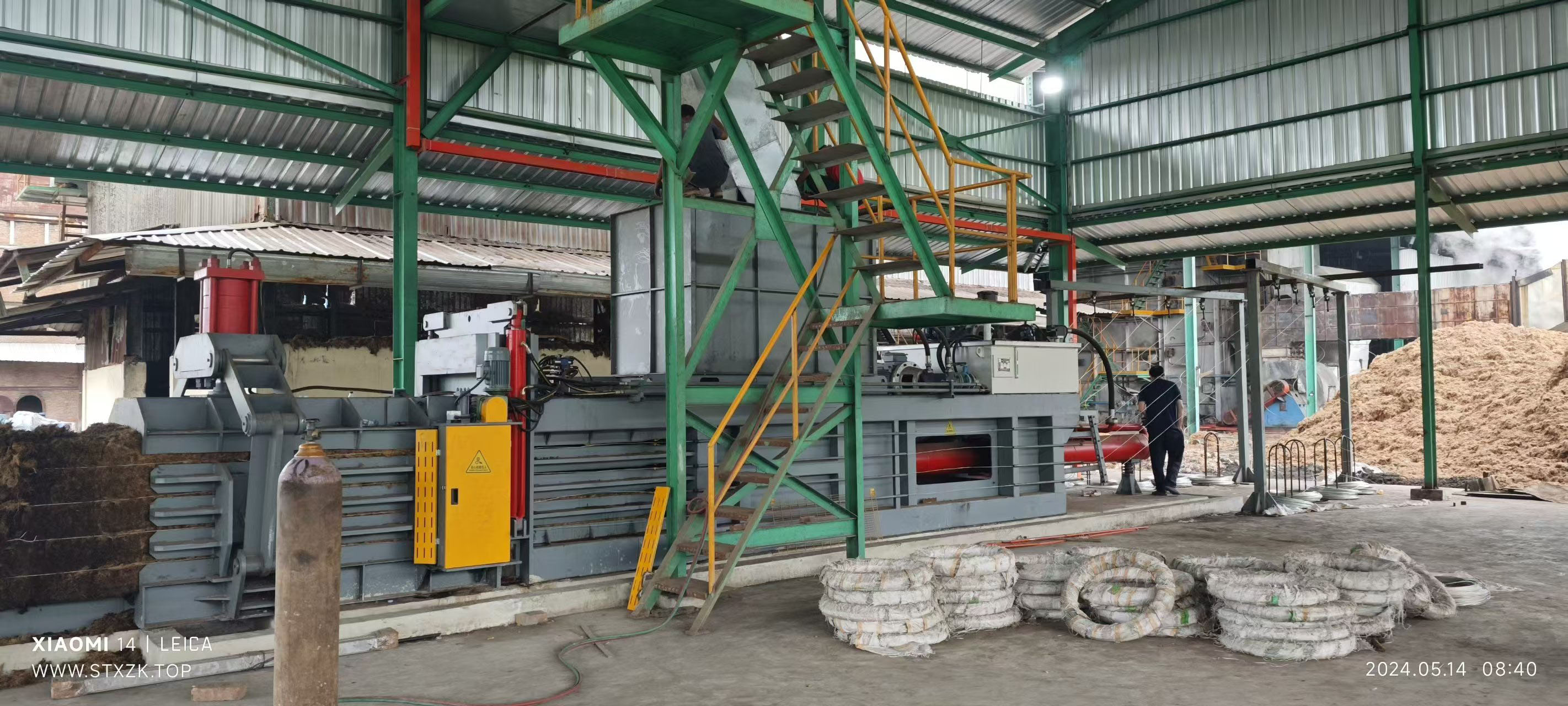
1. Industry-Specific Requirements for Hydraulic Balers
Procurement of a hydraulic baler requires careful consideration of the material being processed and the operational environment. Different industries impose unique demands:
- Agriculture & Biomass: Materials like alfalfa, wheat straw, and peanut hay require large feed openings and bagging capabilities. The NKB280-1 is specifically designed for these materials, with a feed opening of 2600×1100 mm and a capacity of 30–32 bales per hour.
- Waste Treatment & Recycling: Facilities handling waste plastic or paper demand low noise, low energy consumption, and high efficiency. A horizontal automatic baler (e.g., NKW180BD) with a capacity of 6–8 tons per hour and a power of 45 kW is a common choice.
- Metal & Scrap: Heavy-duty vertical or horizontal balers with high cylinder force (e.g., 200 tons) are needed for compressing scrap aluminum, steel drums, or vehicle parts. The NK1580T200 vertical metal baler offers 200 tons of force and produces bales up to 2000 kg.
- Textile & Clothing: Two‑chamber machines like the NK‑T90L (90 tons, 10–12 bales/h) are ideal for garments and sacks, with automatic tying options.
In many cases, international compliance marks are mandatory. For European markets, CE certification (e.g., ATTESTATION CERTIFICATE OF MACHINERY DIRECTIVE No. EASY03220201M) verifies conformity to EN ISO 12100:2010 and EN 60204‑1:2018. Buyers in the EU should request such documentation from suppliers.
2. Three Core Competencies of a Reliable Baler Supplier
Choosing a supplier that can meet specialized needs goes beyond price. Three essential capabilities define a competent partner:
▶ Industry Customization Experience
A supplier with a proven track record across sectors (e.g., agriculture, recycling, metal) can adapt machine parameters – feed opening size, chamber volume, tying method – to the client’s material. Shaanxi Nick Machinery Equipment Co., Ltd. (brand nkbaler) has been designing customized hydraulic balers since 2013, serving over 60 countries with 90% export ratio.
▶ Compliance & Certification
Certifications such as CE (EN ISO 12100), UKCA, or GOST are non‑negotiable for many markets. The company holds an ATTESTATION CERTIFICATE (no. EASY03220201M) issued by UDEM International, valid until 2027, and a VERIFICATION OF CONFORMITY (no. DPWD/09/060/2024) covering EN 60204‑1 and EN 415‑1. These documents provide verifiable proof of safety and quality.
▶ Durable Design for Harsh Environments
Industrial balers often operate in dusty, hot, or high‑humidity conditions. Essential features include thermal protection sensors (to prevent overheating), heavy‑duty steel frames (machine weights up to 34 tons), and cooling systems (water cooling or oil chiller). The NKW200Q, for instance, has a mainframe weight of 34 tons and a feed opening of 2400×1100 mm, built for continuous 12–15 ton/hour operation.
3. Case Study: Tailored Solutions from a Chinese Manufacturer
One example comes from a recycling station in Indonesia. The client needed to process mixed waste plastic and waste paper in a single, reliable machine. nkbaler supplied a semi‑automatic horizontal baler (model NKW100QT) with a 100‑ton cylinder, 30 kW main motor, and a chain conveyor 2000×12000 mm. The unit achieved stable operation with low noise and energy consumption, meeting the project’s special requirements for low energy and high efficiency. The client reported trouble‑free operation for over two years.
Another case involves an agricultural manufacturer in Pakistan baling alfalfa and wheat straw. The NKB280 bagging machine (45 kW×2, 32,000 kg weight) was installed with a chain conveyor feed, producing 30–32 bales per hour at 400–450 kg per bale. The solution matched the client’s need for high capacity and consistent bale density.
4. Key Points for Buyer–Supplier Cooperation
To ensure a successful procurement, buyers should follow these steps:
- Define industry standards upfront: Specify applicable regulations (e.g., CE, ATEX) and material characteristics (density, moisture content) in the request for quotation.
- Request on‑site measurement or detailed data sheets: For large projects, the supplier should visit the facility or provide a layout drawing showing machine dimensions (e.g., mainframe: ~11×4.3×5.8 m for the NKW200Q) and conveyor requirements.
- Confirm after‑sales support: Ensure remote technical support and a clear spare‑parts policy. The supplier should offer a minimum order quantity (MOQ) of 1 unit and pre‑shipment inspection (100% test). Payment terms like 40/60 or 30/70 are common, with FOB/CIF delivery.
- Plan for emergency response: Discuss maintenance intervals, cooling system checks (water pump 0.75 kW + fan 0.26 kW), and replacement part availability.
For further technical details and product specifications, download the company brochure: nkbaler Brochure (PDF).
Have Questions or Need More Details?
Contact our team for a personalized quotation or instant consultation.
Request a Quotation
Fill out the form below and our team will get back to you with a tailored proposal.
WhatsApp Direct Chat
Prefer to chat in real-time? Message us on WhatsApp for instant assistance & quick answers.
- Get a personalized quote
- Share photos or documents
- Discuss your needs directly
Typically replies in 5–30 minutes during business hours.