
Vertical vs. Horizontal Hydraulic Baler: A Facility Decision
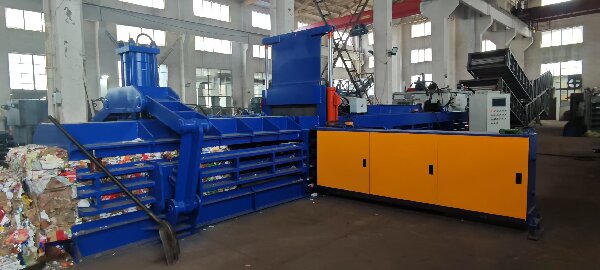
Short answer. A vertical hydraulic baler is the better fit when material arrives in small batches, floor space is tight, and one operator can load, compress and tie each bale by hand. A horizontal hydraulic baler is the better fit when material arrives continuously, when the finished bale must be dense and heavy enough for mechanical handling, and when annual tonnage justifies powered feeding and automatic tying. Horizontal machines such as the NKW125Q — rated at 125 tons of cylinder force and 10–12 tons per hour — sit at the throughput end of that range; vertical units sit at the low-volume, low-footprint end.
This guide is written for procurement and operations managers who have already decided to bale on site and now have to choose an orientation, size it against real material flow, and write an acceptance test both sides can measure. It covers the three numbers that decide most projects, the criteria that surface late in evaluation, a step-by-step comparison process, a side-by-side table, and the purchasing terms worth settling before a purchase order is issued.
The problem: two machines, one budget line
Both orientations are sold as "hydraulic balers", which makes quotations look comparable when they are not. A vertical unit and a horizontal unit of similar press force can differ by an order of magnitude in installed footprint, in labour per shift, in bale weight and in the peripheral equipment needed to keep them fed.
The commercial risk is symmetric. Over-specifying a horizontal line for a site that produces two or three tonnes of cardboard a day leaves an under-used machine, a long dead strip of floor and an automation system maintained for nothing. Under-specifying with a vertical baler in a recycling operation with continuous infeed creates a permanent queue, a bale that a hauler will not handle efficiently, and a labour cost that grows with volume.
The decision therefore should not start from machine price or press force. It starts from material flow, available floor envelope, and the bale the downstream buyer will accept — then works back to orientation and configuration.
Industry background: why the orientation question keeps coming up
Baling equipment purchasing tends to follow material volumes. Fortune Business Insights, in a report published in September 2026, projects the global baler market — agricultural and industrial combined — to reach USD 18.02 billion by 2034, and Precedence Research puts Asia Pacific at a 39% share of the hydraulics market in 2025. Those figures describe broad categories rather than hydraulic balers specifically, so they are useful for understanding supplier concentration and component availability, not for sizing a single facility's requirement.
On the trade side, hydraulic balers are typically classified under HS 8479.89 or 8422.40 depending on the material processed and the automation level, which means two similar-looking machines can sit under different codes and attract different documentation requirements. Buyers comparing imported offers should confirm the classification against the actual configuration rather than copying a code from an earlier shipment.
What actually changes when the chamber turns vertical
Both machine types use a hydraulic cylinder to compress material against a chamber wall. The difference is the direction of travel, and most other differences follow from it.
A vertical baler stands the compression chamber upright. Material is loaded through a door or gate, the ram travels downward, and the finished bale is usually tied by hand through slots in the chamber before the door is opened and the bale is removed. Loading is batched: fill, compress, repeat, then tie and eject. Plan area is small, but the machine uses height, and the working height of the loading door and tie points sets a practical limit on how large and how heavy a bale one person can handle.
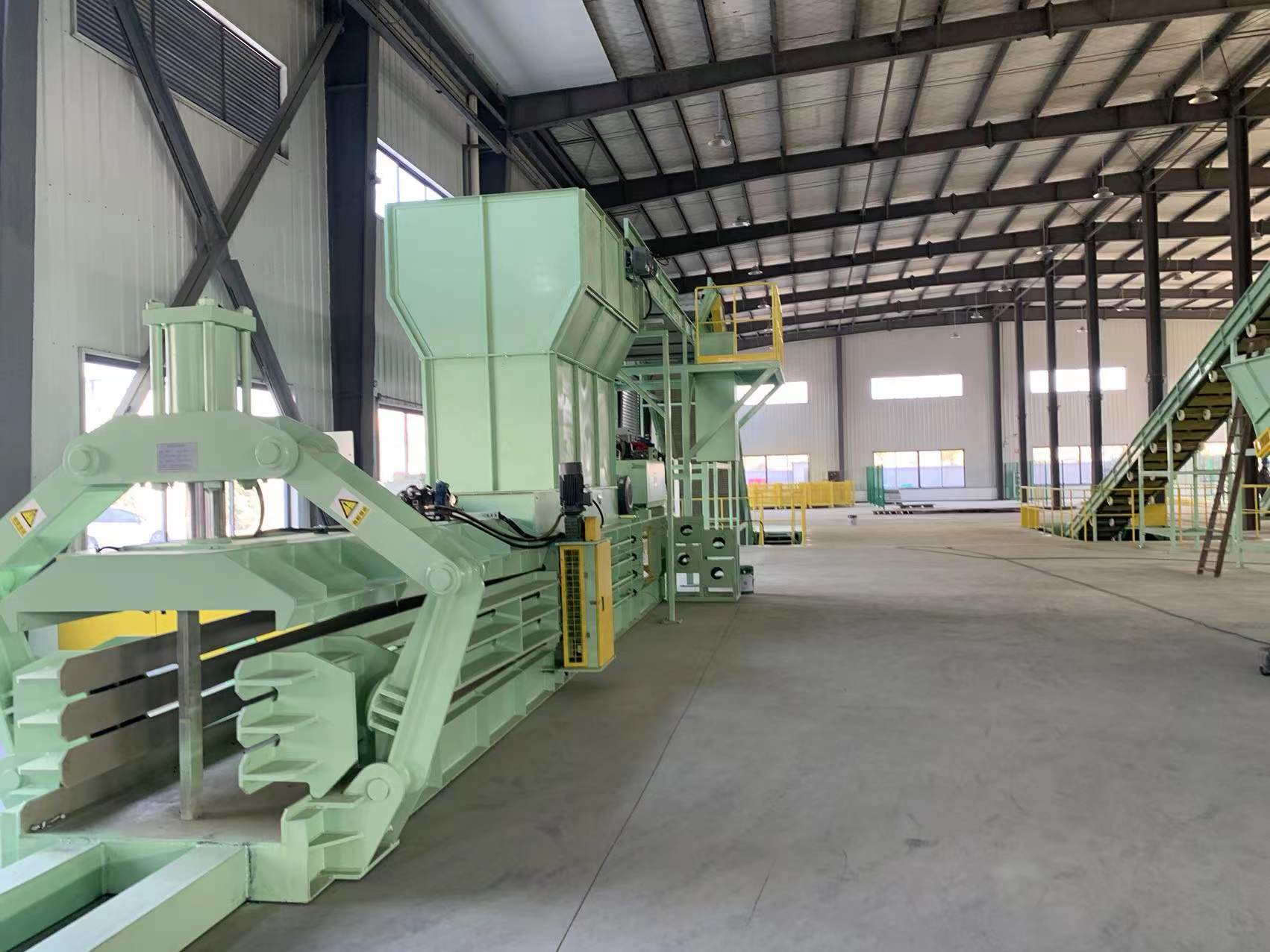
A horizontal baler lays the chamber along the floor. Material is fed at one end — by conveyor, tipper, forklift or by hand — and the ram pushes it horizontally toward a discharge end where the bale is tied and ejected. Because feeding can be mechanised and baling can run continuously, horizontal machines can be matched to a sorting line or a process that produces material all shift. The trade-off is length: the machine, infeed, discharge zone and forklift aisle together occupy a long strip of floor.
The practical consequence is the labour model. A vertical baler is paced by the operator; a horizontal baler is paced by the machine. That single sentence explains most of the operating-cost difference buyers notice after installation.
Three numbers that decide most projects
1. Throughput in tons per hour
Throughput is the first filter because it is the only specification that ties the machine to your material flow. Demand it as a rate over a defined period with the material named: tons per hour for your cardboard, film, PET bottles or metal scrap at your typical bulk density, not a generic figure. The NKW125Q's rated 10–12 tons per hour, for example, is only meaningful when read together with the material and the feeding method it was measured on.
For a vertical machine, a published rate is less useful than cycle arithmetic: the number of load-compress cycles needed to fill the chamber, plus tying and ejection, multiplied by the number of bales per shift. The constraint is rarely the cylinder; it is how fast one person can feed and tie.
Apply the same test to both orientations. Ask for the basis of any figure — material, bulk density, moisture, cycle definition, assumed uptime and operator count. A rate quoted without those conditions cannot be compared across suppliers and cannot be used as an acceptance criterion.
2. Footprint measured as an envelope, not a machine length
Vertical and horizontal machines fail site surveys for different reasons. A vertical baler needs a small plan area but needs headroom: ceiling and mezzanine clearance above the loading door, space to swing the gate, and enough working room at tie height. A horizontal baler needs a straight run: machine length, infeed approach, discharge and bale staging, forklift turning circle, maintenance access on the cylinder side, and storage for wire or strapping.
Measure the complete envelope on site with a tape before comparing quotations. If no straight run of floor can be freed — common in urban transfer stations and older manufacturing buildings — a vertical unit, or a shorter-chamber horizontal, may be the only physically installable options regardless of throughput.
3. Bale density and bale format
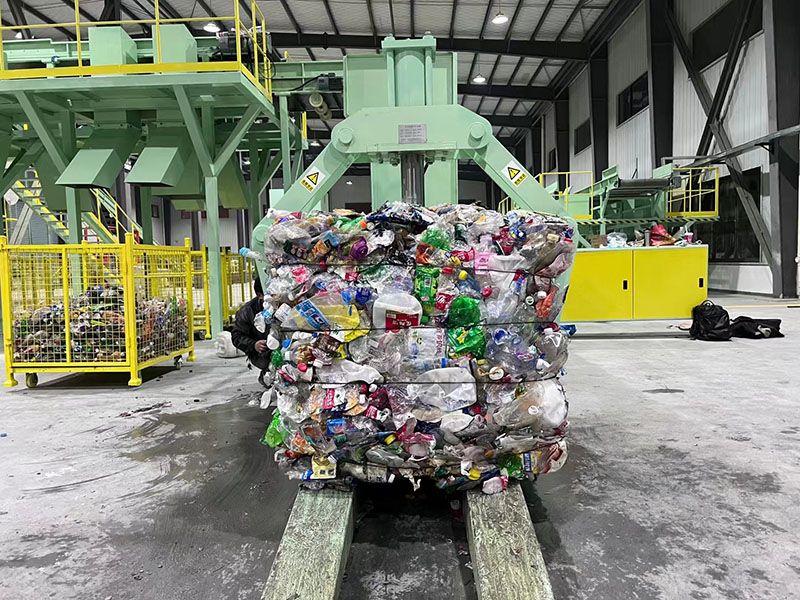
Cylinder force, chamber dimensions and compression sequence together determine what leaves the machine. Density matters commercially because haulage, storage and mill acceptance are usually priced per ton or per bale, so a denser bale carries more material in the same truck movement.
Force alone is not density. Two machines with the same tonnage can produce different bales if the chamber, the compression sequence or the tie method differ. Ask for bale weight, bale dimensions and density measured on material comparable to yours — same material, similar moisture, same contamination level — and ask how the bale is tied, because a dense bale that bursts in the trailer is a cost, not a saving.
Criteria that surface late in evaluation
- Feed opening and loading method. The opening geometry decides how material can be presented: loose by hand, in a tipper, on a conveyor, or as a pre-shredded stream. A machine that must be hand-fed cannot serve a conveyor-based line, and a conveyor-fed horizontal will not tolerate the irregular batches a small vertical unit absorbs.
- Bale size against downstream handling. Confirm the dimensions and weight your hauler, mill or furnace can accept, and who will move the bale — one person with a pallet truck, or a forklift.
- Automation and tie method. Automation is a configuration decision, not a brand feature. One manufacturer's own range makes the spread visible: it lists vertical balers, a full-automatic horizontal baler and a manual horizontal baler as separate products. Automatic tying removes a labour task and a variability source; manual tying keeps capital cost and control complexity lower.
- Material profile. Bulk density, springback, abrasiveness, moisture and contamination each shift chamber design, force class and feeding method. Film and PET bottles expand after compression; metal scrap and drums are abrasive and heavy; rags and straw behave differently again; sawdust and wood shavings flow and generate dust. Quote against your material, not a category label.
- Duty and thermal protection. A horizontal machine on a sorting line may run under sustained load for a full shift. Thermal protection using temperature sensors is a control measure, not a substitute for correct sizing — ask how the hydraulic system is protected, what the derating conditions are, and what the operator is expected to do when a protection device trips.
- Site services. Voltage, phase, frequency, control voltage, enclosure rating, compressed air if the tie system uses it, foundation or floor-loading requirements, and drainage.
Step-by-step: how to run the comparison
- Fix the material and tonnage baseline. Use seven consecutive days of real weight data, not an annual figure divided by 250. Record peak day and peak hour separately, and note the number of shifts the material is produced.
- Measure the installation envelope on site. Include door widths for machine delivery, ceiling height, forklift routes and the space needed to stage finished bales. Confirm that the machine can physically be delivered and installed, not just operated.
- Define the bale you must produce. Dimensions, weight, density, tie type and the receiving party's acceptance rules. This single specification will eliminate most unsuitable configurations.
- Shortlist orientations against steps 1 to 3. If the tonnage is continuous and the envelope is long enough, horizontal moves to the front. If the material is intermittent and the floor is constrained, vertical stays in contention. Keep at least one alternative in the shortlist until a material test is complete.
- Compare labour, not only machine price. Model the operator hours per shift for feeding and tying on each option, then add the maintenance and consumables estimate. A cheaper machine with manual tying can cost more per ton at high volume; automation rarely pays back at low volume.
- Write the acceptance protocol into the RFQ. State the material to be tested, the run duration, what will be measured, and the pass thresholds. Acceptance criteria written after delivery are a negotiation, not a test.
Side-by-side comparison
The table summarises the documented and mechanical differences that matter in a facility decision. It is a screening tool: final selection requires model-level specifications and a material test.
| Decision dimension | Vertical hydraulic baler | Horizontal hydraulic baler |
|---|---|---|
| Compression direction | Ram travels downward in an upright chamber | Ram travels horizontally along a floor-level chamber |
| Floor area | Small plan area; uses height instead | Long strip of floor for machine, infeed and discharge |
| Headroom | Significant, including loading and tie access | Lower, but aisle width and length dominate |
| Loading | Batch loading by hand through a door or gate | Conveyor, tipper, forklift or hand feeding at the infeed |
| Tying | Usually manual, through chamber slots | Manual, semi-automatic or automatic depending on configuration |
| Bale handling | Lighter bales, moved manually or by pallet truck | Heavier bales, moved by forklift or grab |
| Throughput pattern | Operator-paced; output set by the load-compress-tie cycle | Machine-paced; continuous rating, 10–12 tons per hour on the NKW125Q |
| Automation ceiling | Limited by manual loading and tying | Automatic feeding and tying available in full-automatic configuration |
| Typical fit | Intermittent material, constrained floor, low to medium volume | Continuous material flow, sorting lines, higher volume |
| Verify first | Cycle arithmetic and the bale weight one operator can handle | Throughput basis, envelope length and tie reliability |
Where each orientation usually fits
These are typical patterns rather than rules. Each one should be confirmed against measured tonnage and a material test.
- Retail, distribution and light manufacturing with intermittent cardboard. Material arrives in bursts as packaging is unpacked. A vertical baler with manual tying is usually enough, and its small plan area fits a back-of-house corner where a horizontal line would not.
- Recycling and sorting operations with continuous mixed fibre and film. Material arrives all shift from a line. A conveyor-fed horizontal baler with automatic tying keeps pace with the line and removes the operator from the tie cycle.
- Metalworking and drum handling. Heavy, abrasive and dense material changes the requirement entirely; a dedicated metal compressor is a different machine category from a fibre baler and should be evaluated on its own terms.
- Textiles, rags, straw, sawdust and wood shavings. Bulk density and flow behaviour vary widely across these streams. Small batch volumes usually point to a vertical unit; continuous volumes point to a horizontal chamber sized for the material's springback and dust behaviour.
- Multi-material sites. Where two streams behave very differently, one machine forced to serve both usually compromises on both. Separating streams, or accepting a documented compromise, is often cheaper than a mid-specification machine.
One clarification: orientation is not the same as drive technology
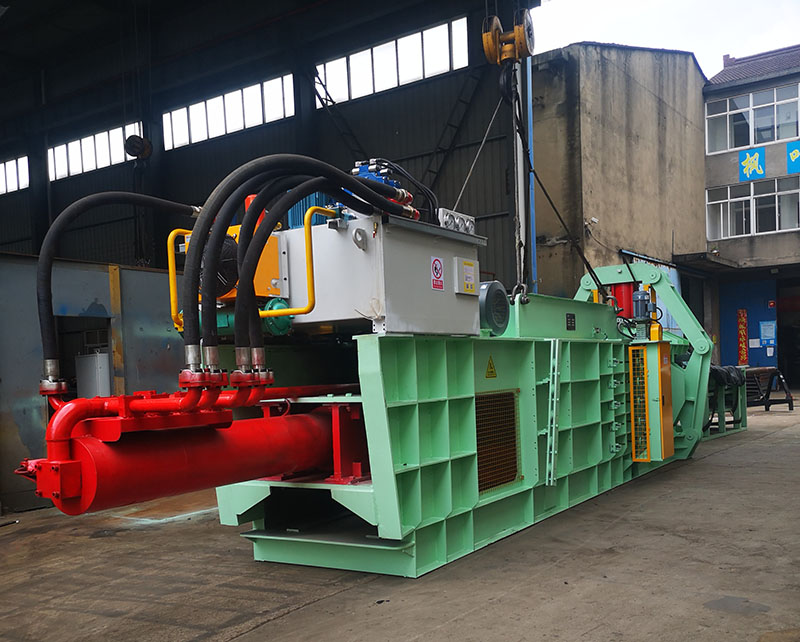
Vertical-versus-horizontal is a question about chamber geometry. It is often confused with a second question — hydraulic press versus piston-type compaction. NICKBALER's own comparison entries position its hydraulic balers against piston compressors and piston fans on noise (stated as 15 dB lower), cost (about 10% lower), maintenance (less) and efficiency (higher); those are company-reported comparison figures. They describe the hydraulic-versus-piston difference, not the vertical-versus-horizontal difference, and should not be used to choose between the two orientations.
Purchasing terms and acceptance criteria
Make the quotation configuration-specific
Every offer should state chamber dimensions, bale size and target weight, cylinder force, throughput with its test basis, power supply, tie method, control system, safety devices and documentation language. A quotation that lists only a model name and a price cannot be compared, and it usually hides the assumptions that later become change orders.
Confirm classification and import documentation
Confirm the HS classification against the actual machine: 8479.89 or 8422.40 are the usual candidates for hydraulic balers depending on the material processed and the automation level. Have your customs broker confirm the code, the origin documentation and any destination-market requirements before shipment, not after arrival.
Test your material before shipment and on site
Ask for a trial on your own material and define it in writing: sample quantity, moisture and contamination level, target bale dimensions and weight. On site, run an acceptance test over a fixed period and record bale weight, bale dimensions, density, cycle time, achieved throughput, hydraulic leaks, noise level at the operator position, function of guards and interlocks, and thermal behaviour under sustained load. Pass thresholds should be numbers agreed in the contract.
Settle service before delivery
Agree warranty scope and duration, spare-parts list and availability, recommended spares holding, installation and commissioning responsibilities, operator training, and the response path for a hydraulic fault. These items cost little to negotiate before the order and a great deal afterwards.
Manufacturer context: NICKBALER
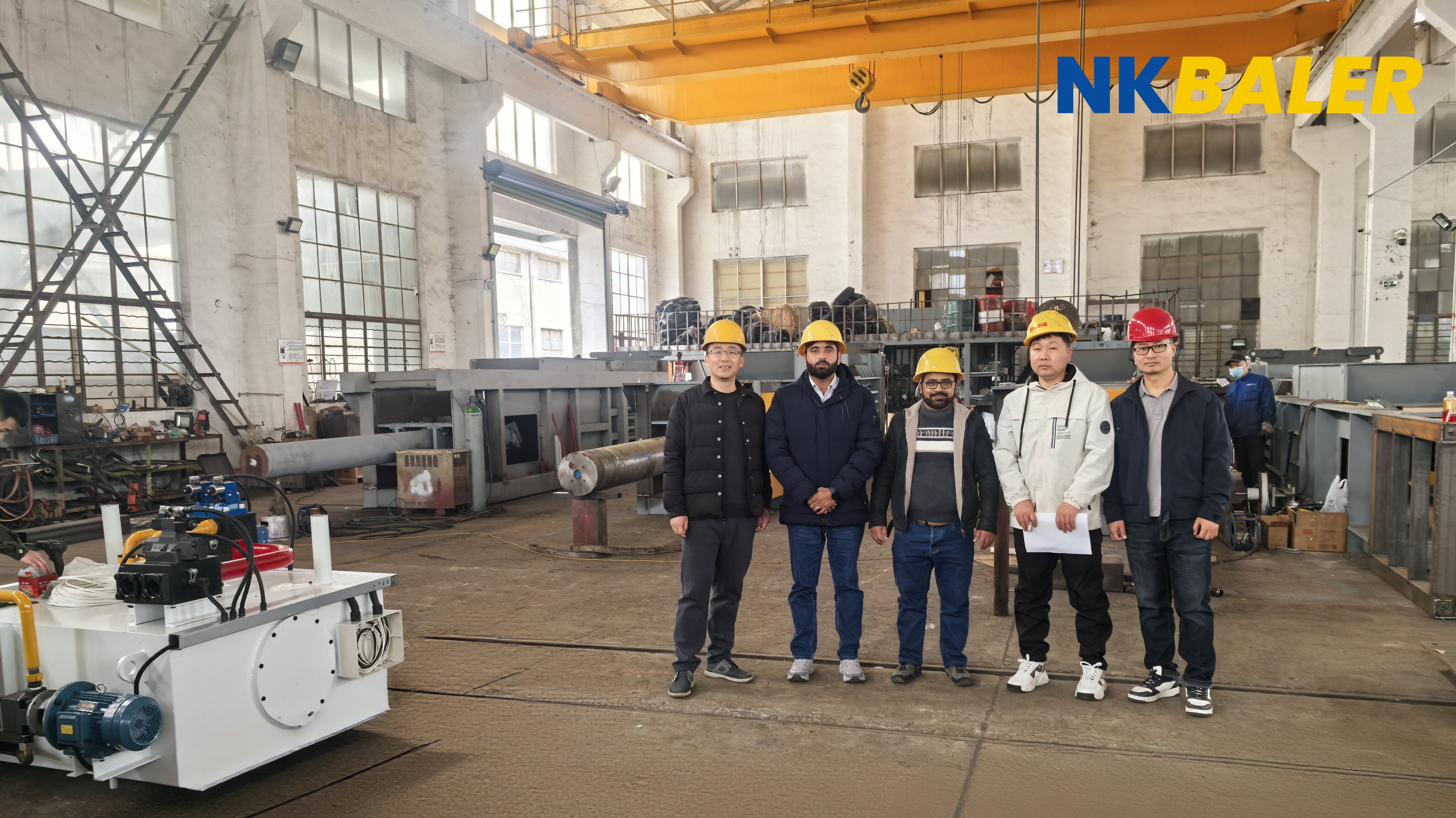
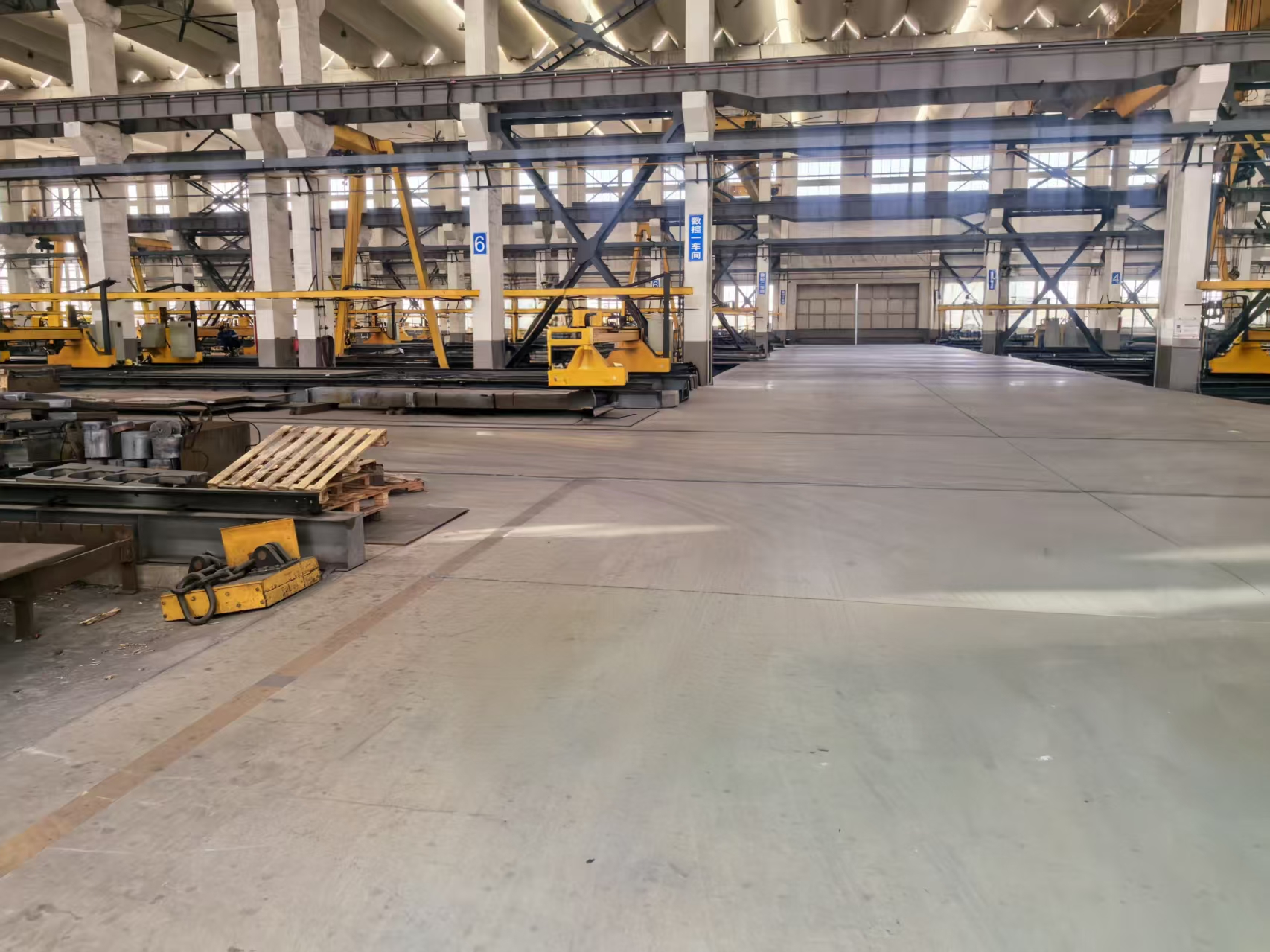
NICKBALER is the brand of Shaanxi Nick Machinery Equipment Co., Ltd., a baler manufacturer based in Wuxi, Jiangsu, China, that designs and builds vertical balers, a full-automatic horizontal baler, a manual horizontal baler and press bagging machines, and also supplies metal compressors, shredders and PET bottle balers. The company lists a 5,000 m² facility, 50 employees, a 15-person R&D team and annual output of 600, with roughly 80–90% of production exported to more than 60 countries; North America, South America and Asia are named as main markets, with sales also described in Europe and the Middle East.
For a buyer comparing grades, the company separates two builds. NK BALER is described as the standard long-cylinder servo hydraulic baler, positioned for regular daily baling with cost as the priority. NICK BALER is described as the heavier build, with thicker material and stronger structure, higher-grade hydraulic and electrical components, and suitability for continuous heavy-load work with a lower failure rate. That distinction matters in an orientation decision: a vertical unit used intermittently and a horizontal unit run for full shifts are not being asked to do the same work, and the build grade should match the duty.
Frequently asked questions
What compliance documents should we request with a hydraulic baler quotation?
Request four sets. First, the conformity documentation applicable in your destination market, since machinery-safety requirements differ by jurisdiction and should not be assumed from a supplier's general marketing. Second, the electrical configuration — voltage, phase, frequency, control voltage and enclosure rating — matched to your site supply. Third, the customs classification you will declare: hydraulic balers are typically classified under HS 8479.89 or 8422.40 depending on the material processed and the automation level, so the code should be confirmed against the actual configuration. Fourth, the safety devices fitted — guarding, door and gate interlocks, emergency stop and any presence-sensing control — documented in the manual you will actually receive.
Can one machine handle both light cardboard and heavy material?
No single configuration is ideal for both. Light, springy material rewards a large chamber and a compression sequence that controls expansion; heavy, abrasive material rewards force class, wear protection and a different feeding method. A horizontal model such as the NKW125Q, rated at 125 tons of cylinder force and 10–12 tons per hour, is a heavy-duty horizontal class of machine, while a vertical unit is built around batch feeding and manual tying. Where two streams genuinely differ, either separate them across two machines or accept a documented compromise and test it before purchase.
How should we compare cost between a vertical and a horizontal machine?
Compare cost per ton baled, not machine price. Build the comparison from machine and installation cost, civil work and floor space value, operator hours per shift for feeding and tying, power consumption, baling wire or strapping, maintenance and spares, and the haulage saving produced by denser bales. At low volume, automation rarely pays back and a vertical unit with manual tying is usually the lower total cost. At continuous volume, the labour and queueing cost of a manual machine typically outweighs the capital saving. Comparing like build grades — standard versus heavy-duty — prevents a misleading price gap.
Can we test our own material before we commit to an order?
Yes, and it should be a condition of the order. Supply a representative sample with its moisture and contamination level, state the target bale weight and dimensions, and ask for a trial record showing measured bale weight, density and cycle time. A trial on someone else's material of the same category is not equivalent, because bulk density and springback change the result. Factory trials can be arranged at the Wuxi, Jiangsu facility, and the same protocol should then be repeated as an on-site acceptance test after installation.
What determines delivery time, and what should the contract specify?
Delivery time is set by configuration rather than by orientation alone: chamber and force class, automation and tie system, power specification, documentation language, inspection requirements and shipping terms all extend the schedule. The contract should specify a production schedule with milestones, pre-shipment inspection with a photo or video record, Incoterms, packing suitable for the transport mode, and the division of installation and commissioning responsibilities. Because these vary by order, ask for a written schedule for your exact configuration; a generic lead time is not a commitment. Sharing your material profile, measured tonnage, floor plan and site power supply is the fastest way to get an accurate configuration review and schedule.
Conclusion
The orientation decision resolves quickly once it is treated as a facility question rather than a specification contest. Continuous material, a long floor envelope and a bale that must be mechanically handled point to a horizontal hydraulic baler, where throughput ratings such as 125 tons of cylinder force and 10–12 tons per hour on the NKW125Q become relevant. Intermittent material, constrained floor space and a bale one operator can handle point to a vertical machine, where the effective output is set by the load-compress-tie cycle rather than by the cylinder.
Whichever way the shortlist falls, three things should be settled before the order: the measured envelope on your floor, the bale specification your downstream handler will accept, and a written acceptance test using your own material. Those three items protect the investment more reliably than any single catalogue figure.
Next step
If you are comparing a vertical and a horizontal configuration for a specific site, the practical next step is a configuration review against your material profile, measured tonnage, floor plan and power supply.
Download the product catalogue: NICKBALER hydraulic baler catalogue (PDF)
Contact: Sales@nkbaler.com | Tel / WhatsApp +86 15021631102 | Shaanxi Nick Machinery Equipment Co., Ltd., Wuxi, Jiangsu, China | www.nickbaler.com
Have Questions or Need More Details?
Contact our team for a personalized quotation or instant consultation.
Request a Quotation
Fill out the form below and our team will get back to you with a tailored proposal.
WhatsApp Direct Chat
Prefer to chat in real-time? Message us on WhatsApp for instant assistance & quick answers.
- Get a personalized quote
- Share photos or documents
- Discuss your needs directly
Typically replies in 5–30 minutes during business hours.