
Hydraulic Baler Compliance Guide: Standards, Regional Requirements, and NKW Model Specs
Direct answer: A hydraulic baler is compliance-ready for a project when the exact model, configuration, technical data, electrical package, guarding, operating documents, and import classification can be matched to the destination market's requirements. A general supplier certificate does not prove that a specific NKW80Q, NKW100QT, NKW125Q, NKW160Q, or NKW200Q configuration meets those requirements.

This guide is written for procurement teams at the research stage. It does not certify any machine, replace a customs broker, or serve as legal advice. Its purpose is narrower and more useful: it shows how to build a compliance dossier that can be checked line by line before a horizontal hydraulic baler is approved for a food, pharmaceutical, packaging, chemical, electronics, metals, waste treatment, or recycling project.
The reference brand in this guide is nkbaler (Shaanxi Nick Machinery Equipment Co., Ltd.), a China-based manufacturer of vertical balers, full-automatic horizontal balers, manual horizontal balers, and press bagging machines. The machine facts used below come from the supplied NKW specification units. Where a model is listed without a published specification block, this guide says so instead of filling the gap with an estimate.
Problem Definition: Why Baler Compliance Fails Before Delivery
Most procurement delays around hydraulic balers are not caused by a missing hydraulic cylinder. They are caused by a mismatch between what the buyer assumed, what the supplier quoted, and what the destination market will accept. Three failures are common.
- Certificate confusion: a supplier sends a certificate for a product family, but the document does not name the exact model, serial number, electrical configuration, or destination market.
- Specification drift: the buyer compares cylinder force only, while bale size, material density, motor power, conveyor size, and mainframe weight change the real application fit.
- Import classification drift: the commercial invoice describes a baling press in general terms, but the customs code and product description do not match the machine being shipped.
For a hydraulic baler, compliance is therefore a document-matching exercise. The buyer needs to prove four things: the machine is the model that was ordered; the technical data matches the approved application; the electrical and guarding documents match the destination requirements; and the import classification matches the shipped product.
Industry Background: What the Verified Data Does and Does Not Show
The wider market context supports the need for disciplined procurement, but it should not be confused with model-level compliance. The verified data package records a global baler market projection of USD 18.02 billion by 2034. That figure covers balers broadly, including agricultural and industrial or recycling balers; it is not a hydraulic-baler-only market size.
The same package records that Asia Pacific led the hydraulics market with a 39% share in 2025. That is a hydraulics-market figure, not a hydraulic-baler market share. It is useful as background for supply-chain conversations, but it does not verify any individual factory, certification, or model performance.
Trade classification is clearer. Hydraulic balers are typically classified under HS Code 847989 or related subheadings in Chapter 84, depending on the material processed and automation level. The HS system is maintained by the World Customs Organization, and trade databases store records under multiple classification versions. This means the HS code is a classification starting point, not a certificate and not a substitute for a customs ruling.
The supplier landscape also explains why documentation requests must be specific. Public supplier pages describe horizontal and vertical configurations, automatic and semi-automatic modes, and applications such as plastic, cardboard, metal, and woven mats. Those portfolio descriptions are useful for initial discovery, but they do not provide harmonized model-level force, chamber, bale, throughput, power, or tie specifications. A buyer who compares portfolio language instead of signed datasheets is comparing marketing categories, not machines.
Detailed Solution: Build a Six-Part Compliance Dossier
The most practical way to evaluate a horizontal hydraulic baler is to require a six-part dossier before the purchase order is released. Each part should be traceable to the model designation and, where available, the serial number.
- Model identity and configuration: exact model, fully automatic or semi-automatic configuration, and any optional equipment.
- Signed technical datasheet: cylinder force, bale size, material density, feed opening, motor power, conveyor size, mainframe weight, and system pressure.
- Electrical and control package: voltage, phase, frequency, control voltage, PLC scope, disconnect, and enclosure details for the destination.
- Guarding and operating documents: general arrangement drawing, foundation or floor-loading drawing, guarding layout, operator manual, maintenance schedule, and spare-parts list.
- Import and regional conformity questions: HS classification, product description, destination-market documentation, and the language required for instructions.
- Acceptance test and handover record: dimensional check, no-load run, control-sequence test, safety-device function test, bale trial, and document handover.
Step-by-Step Breakdown
Step 1: Lock the Model and the Configuration
Start with the exact model designation. The NKW portfolio referenced in the supplied application unit includes NKW80Q, NKW100QT, NKW125Q, NKW160Q, NKW200Q, NKW80BD, NKW125BD, NKW160QT, NKW180QT, NKW180BD, and NKW250BD. Do not allow a quotation to substitute a generic phrase such as NKW horizontal baler for the model number.
Confirm whether the offer is fully automatic or semi-automatic. The supplied specification units for NKW200Q, NKW160QT, NKW180QT, NKW250BD, and NKW80BD describe both fully automatic and semi-automatic horizontal hydraulic baler configurations. Automation level changes the acceptance checklist, the control documentation, and the operator training requirement, so it should be fixed before the datasheet is approved.
Step 2: Request a Signed Datasheet With Comparable Fields
Table 1 uses the verified specification block for five NKW models. It is a comparison of published machine facts, not a ranking. The fields are deliberately limited to what the supplied units state.
| Model | Configuration | Main cylinder force | Bale size (W x H x L) | Material density | Main motor power | Capacity | Mainframe weight |
|---|---|---|---|---|---|---|---|
| NKW200Q | Fully automatic / semi-automatic | 200T | 1100 x 1100 x approximately 1800 mm | 650-700 kg/m3 | 45 kW + 11 kW | 12-15 ton/hour | 34 tons |
| NKW160QT | Fully automatic / semi-automatic | 160T | 1100 x 1250 x approximately 1600 mm | 500-600 kg/m3 | 45 kW + 7.5 kW | 12-15 ton/hour | 28 tons |
| NKW180QT | Fully automatic / semi-automatic | 180T | 1100 x 1250 x approximately 1600 mm | 500-600 kg/m3 | 45 kW + 7.5 kW | 12-15 ton/hour | 28 tons |
| NKW250BD | Fully automatic / semi-automatic | 250T | 1100 x 1250 x 1700 mm | Not stated in supplied unit | 45 kW / 60 HP | 10-15 ton/hour | 30,000 kg |
| NKW80BD | Fully automatic / semi-automatic | 80T | 1100 x 850 x 1700 mm | Not stated in supplied unit | 22 kW / 30 HP | 2-3 ton/hour | 14,500 kg |
Table 1. Verified NKW specification block. Where a field is not stated in the supplied specification unit, confirm it on the signed datasheet before approval.
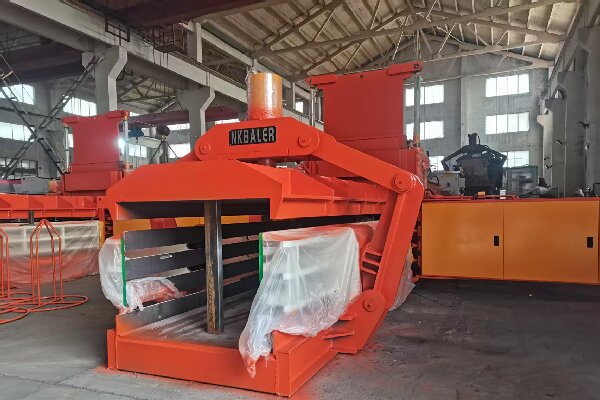
The supplied technical unit does not publish capacity, bale size, motor power, or material density for NKW80Q, NKW100QT, NKW125Q, and NKW160Q. Those model designations are listed in the NKW portfolio, but the missing fields should be treated as RFQ items. Do not assume that a higher model number automatically means a larger chamber, higher density, or a different motor package. Ask for the model-specific datasheet and compare the same fields across every offer.
Step 3: Confirm the Electrical and Control Package
Motor power is not the same as an electrical package. The NKW specification units list main motor power and conveyor power, but they do not provide the complete voltage, phase, frequency, control voltage, enclosure rating, disconnect, or PLC input and output list for every model. The supplied application-scenario unit describes continuous automatic operation, a PLC-controlled cycle, and 24/7 industrial duty for the horizontal baler application. That is a useful operating description, but it is not a substitute for the electrical drawing.
Ask for the electrical drawing that matches the destination voltage and frequency. Confirm the conveyor motor, cooling system, and control circuit separately from the main motor. If the machine will be integrated into an existing line, request the interface list: start and stop signals, safety interlock, fault output, and remote monitoring scope where available.
Step 4: Confirm Guarding, Operating, and Maintenance Documents
Request the general arrangement drawing, foundation or floor-loading drawing, guarding layout, operator manual, maintenance schedule, and spare-parts list. Each document should carry the model and, where applicable, the serial number. If the supplier cannot name the document revision, the dossier is incomplete because the buyer cannot prove which drawing was approved.
For a horizontal baler, the operating documents should explain the feeding sequence, bale tying or wire specification, door or chamber access, emergency stop locations, lockout procedure, and routine inspection points. The supplied data does not certify any guarding arrangement, so the buyer must review the actual drawings rather than accepting a generic statement that the machine is safe.
Step 5: Confirm Import Classification and Regional Questions
Hydraulic balers are typically classified under HS Code 847989 or related subheadings in Chapter 84, depending on the material processed and automation level. Confirm the code with the importer's customs broker and make sure the commercial invoice description matches the machine configuration. The HS code is a customs classification, not a certificate of conformity.
| Destination context | Questions to put in writing | Evidence to file |
|---|---|---|
| EU / EEA | Which conformity route and declaration name the exact model and serial number? Which language is required for the instruction manual? Who holds the technical file? | Signed declaration naming the model, manual language confirmation, technical file reference |
| North America | What is the full electrical package? Which workplace-safety documents does the project require? Are the labels and manual in the required language? | Electrical drawing, label schedule, operator manual, project safety review |
| Middle East, Africa, Asia, South America | What voltage, frequency, ambient temperature, humidity, and dust conditions apply? Which import documents and pre-shipment inspections are required? | Utility confirmation, customs classification, packing list, inspection record |
| All markets | Does the HS code and product description match the machine being shipped? Does the invoice description match the approved datasheet? | Commercial invoice, customs broker confirmation, approved datasheet |
Table 2. Regional question set. The table provides a documentation framework; it does not state that any NKW model holds a particular certificate.
The supplied application-scenario unit lists markets across the Middle East, Africa, Asia, Europe, and the Americas, including the UAE, Brazil, Canada, India, and Saudi Arabia. That list is useful for planning regional documentation, but it is not evidence that a particular model has already been accepted in every listed market.
Step 6: Define Acceptance Criteria Before Shipment
Write acceptance criteria into the purchase order. A practical acceptance record covers:
- Dimensional check against the approved general arrangement drawing.
- No-load run and control-sequence test for the fully automatic or semi-automatic cycle.
- Safety-device function check, including emergency stop and access interlock where applicable.
- Bale trial using the buyer's material, with records for material type, bulk density, moisture condition, target bale size, wire or strap specification, and cycle time.
- Document handover: datasheet, electrical drawing, manual, spare-parts list, and inspection record.
Without a material trial, acceptance is based only on machine function, not application fit. A baler can run empty and still fail to produce the required bale density or weight with the buyer's actual material.
Use Cases: Matching Documentation to the Application
Application fit is not a single specification. The same NKW model can require different documentation emphasis depending on the material stream. The table below uses the industries listed in the supplied application unit and keeps the recommendations at the level of verifiable machine facts.
| Application | What to verify before approval | NKW models to discuss |
|---|---|---|
| Food, pharmaceuticals, packaging | Bale size and density, dust and spill control, electrical enclosure, changeover between packaging materials, manual language | NKW80BD, NKW160QT, NKW180QT, NKW200Q; request datasheets for NKW80Q, NKW100QT, NKW125Q, NKW160Q |
| Metals and electronics recycling | Cylinder force, bale weight, wire specification, wear parts, discharge arrangement | NKW200Q with 200T force; NKW250BD with 250T force and 6#/8# x 5 bale-wire specification |
| Waste treatment and recycling | Throughput, conveyor size, material density, bale handling, continuous-duty control documentation | NKW160QT, NKW180QT, NKW200Q |
| Textile, rag, and garment streams | Bale weight, chamber size, loading method, and whether a vertical or horizontal configuration fits the floor plan | NK60LT vertical textile/clothes baler; NK-T90L double-chamber clothes baler; NK110T150 fiber/coco coir baler |
Table 3. Application-to-documentation map. The table does not rank models; it identifies the documents and specifications that should be checked first.

For textile and rag applications, the supplied portfolio also includes vertical models. The compliance method is the same, but the model datasheet changes. A buyer should not compare a vertical textile baler with a large horizontal waste baler solely on cylinder force, because bale weight, chamber size, and loading method are different.
Comparison Table: What Buyers Should Compare Beyond Tonnage
The NKW specification block shows why tonnage alone is a weak comparison. NKW160QT and NKW180QT share the same bale size, material density, feed opening, motor power, capacity, and mainframe weight in the supplied units, but their main cylinder force differs at 160T and 180T. NKW200Q has a smaller bale height than the QT models but a higher material density range, a larger feed opening, and a higher mainframe weight. NKW250BD has the highest cylinder force in the verified set but a lower stated capacity range than NKW200Q. NKW80BD is the smallest horizontal unit in the verified set, with a 2-3 ton/hour capacity and a 14,500 kg mainframe weight.
These differences matter for compliance because the approved datasheet must match the application, the foundation, the conveyor, and the electrical supply. A buyer who approves a quotation without the full field set may later discover that the bale size, density, or conveyor length does not match the building layout.
FAQ
Does a supplier certificate alone prove that a hydraulic baler is compliant for my market?
No. A certificate or declaration should name the exact model, serial number, configuration, electrical package, and destination market. If the document only names a product family, it is not model-level evidence. For import, also confirm the HS code and product description with a customs broker.
How should I compare NKW80Q, NKW100QT, NKW125Q, NKW160Q, and NKW200Q if only some specifications are published?
Compare only verified fields and request a signed datasheet for the missing ones. The supplied specification block provides detailed data for NKW200Q, NKW160QT, NKW180QT, NKW250BD, and NKW80BD. It does not publish capacity, bale size, motor power, or material density for NKW80Q, NKW100QT, NKW125Q, and NKW160Q. Do not estimate those fields from the model number.
What cost drivers should be documented before comparing hydraulic baler quotes?
Document cylinder force, bale size, material density, motor power, conveyor size and power, mainframe weight, control system, electrical package, spare-parts list, and documentation scope. These are the fields that change the machine configuration and the installation requirements. This guide does not provide price benchmarks because no verified price data is included.
Can we run a material trial before approving the machine?
A material trial should be defined in writing before approval. Record the material type, bulk density, moisture condition, target bale size, wire or strap specification, and cycle time. If a trial is not possible, the acceptance record should state that approval is based on machine function only. Buyers can request a material-review conversation and quotation through nkbaler.
What should be confirmed in the lead-time and handover plan?
Confirm the lead time in writing, together with the shipping dimensions, foundation or floor-loading requirements, utility connection, commissioning scope, operator training, spare-parts list, and document handover. No specific lead time is stated in the supplied data, so it should be confirmed in the quotation. To request a model datasheet, material-review conversation, or quotation, contact nkbaler through www.nickbaler.com or Sales@nkbaler.com. The company brochure is available for download: nkbaler brochure.
Conclusion
Hydraulic baler compliance is not a single document and not a single number. It is a chain of evidence: the correct model and configuration, a signed datasheet with comparable fields, an electrical and control package that matches the destination, guarding and operating documents that carry the model identity, an import classification that matches the shipped product, and an acceptance record that proves the machine works with the buyer's material.
For NKW evaluation, use the verified specification block as the starting point. Compare NKW200Q, NKW160QT, NKW180QT, NKW250BD, and NKW80BD on the published fields. Treat NKW80Q, NKW100QT, NKW125Q, and NKW160Q as models that require a model-specific datasheet before they can be compared. That approach is slower than accepting a generic certificate, but it gives the procurement team something a certificate cannot: a traceable, auditable decision.
Next Step
Request the model datasheet, electrical drawing, and documentation list for the NKW configuration you are evaluating. Include the material type, target bale size, throughput, destination market, and voltage in the request so the supplier can respond with the correct documents.
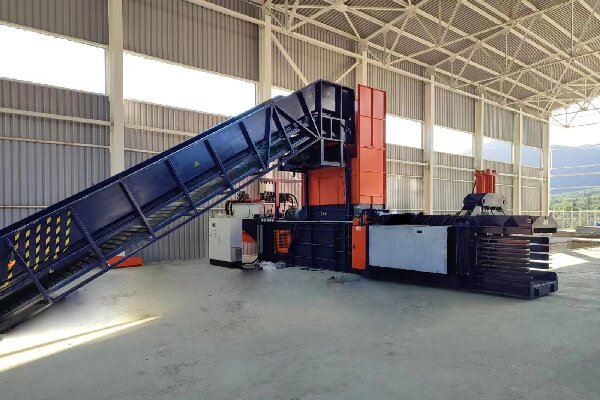
Download the nkbaler brochure or contact Sales@nkbaler.com.
Have Questions or Need More Details?
Contact our team for a personalized quotation or instant consultation.
Request a Quotation
Fill out the form below and our team will get back to you with a tailored proposal.
WhatsApp Direct Chat
Prefer to chat in real-time? Message us on WhatsApp for instant assistance & quick answers.
- Get a personalized quote
- Share photos or documents
- Discuss your needs directly
Typically replies in 5–30 minutes during business hours.