
How to Evaluate a Hydraulic Baler Supplier: Capability Verification and Delivery Assurance
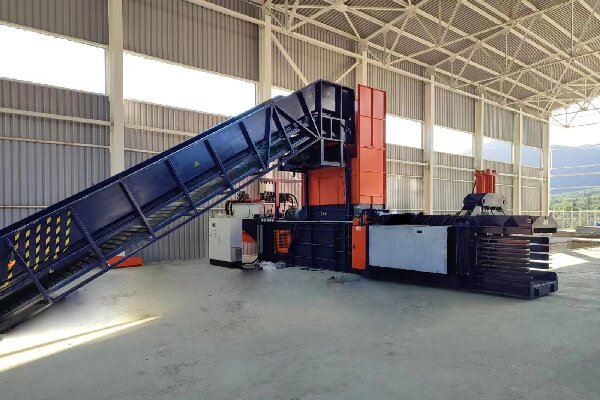
Capability verification starts at machine level: a supplier's offer should be traceable to a datasheet line, a certificate number and a delivery commitment.
A hydraulic baler is only as reliable as the supplier's ability to prove three things: that the specifications on the quotation match a real machine, that production capacity exists behind the promised delivery date, and that the conformity documents required at the border will be issued with the shipment. Supplier evaluation is therefore a documentation exercise before it becomes a price negotiation.
This guide is written for procurement teams, importers, recycling operators and brand owners who are comparing hydraulic baler suppliers at the research-to-evaluation stage. It sets out a four-pillar verification model, a seven-step workflow, an acceptance-criteria list and a delivery-assurance checklist that can be applied to any offer. Where a concrete benchmark is useful, the guide uses verifiable data from Shaanxi Nick Machinery Equipment Co., Ltd. (NKBALER), a hydraulic baler manufacturer established in 2013 that operates a 5,000 m² factory and exports mainly to North America, South America and Asia.
Problem Definition: Why Hydraulic Baler Offers Are Hard to Compare
Most hydraulic baler quotations look similar at first glance and become incomparable at the second. Three structural problems explain why suppliers are difficult to evaluate with a simple price comparison.
1. Specifications are written in different conventions
Main cylinder force may be stated as tonnage, as pressure in MPa, or as a combination of both, and throughput may be quoted per hour at a material density that is not disclosed. Without a stated density and bale size, a throughput figure cannot be benchmarked. A supplier that states 12–15 t/hour at 400–600 kg/m³ is describing a different duty from a supplier that states 12–15 t/hour at 650–700 kg/m³.
2. Quoted configuration is often narrower than the installed machine
Whether the offer includes an automatic tie unit, a lifting door, a feed conveyor, the conveyor motor or the wire/strap supply changes the usable throughput of the line, not only the price. Unless those items are listed line by line, two offers cannot be compared on capability.
3. Delivery is promised but not defined
A lead time without a starting trigger, a test record, a shipping document list and a delay clause is an intention rather than a commitment. This is where most sourcing risk sits, because the machine specification is visible at the quotation stage while the delivery risk only appears after the deposit has been paid.
Industry Background: Why Verification Now Carries More Weight
The commercial context supports a more disciplined evaluation. Fortune Business Insights projects the global baler market to reach USD 18.02 billion by 2034, which keeps supplier capacity under pressure and makes delivery assurance a competitive differentiator rather than an administrative detail.
Supply is concentrated. Precedence Research reports that Asia Pacific held a 39% share of the hydraulics market in 2025, which means a large proportion of hydraulic baler offers originate from a single manufacturing region with wide variation in factory scale, documentation practice and export experience. Buyers dealing with that variation need a verification method, not a brand list.
Customs classification adds a second layer. Hydraulic balers are typically classified under HS Code 847989 or related subheadings in Chapter 84, and in some cases under 842240, depending on the material processed and the automation level. The Harmonized System is maintained by the World Customs Organization, and trade databases store records under multiple classification versions (H0, H1, H2). For the buyer, the practical consequence is simple: the supplier should be able to propose a classification with reasoning, and the commercial invoice, packing list and certificate of origin should carry the same code. A supplier that cannot discuss classification is a supplier that has limited export administration experience.
The Four-Pillar Supplier Evaluation Model
Capability verification is best handled as four independent pillars. Each pillar produces its own evidence, and a supplier should not be qualified until all four are satisfied.
Pillar 1 — Model-level specification verification
Ask for a datasheet per model that states main cylinder force, system pressure, bale size, material density range, feed opening, main motor power, machine weight and throughput basis. Compare offers using those fields only. The purpose is to force the conversation away from catalogue adjectives and onto parameters that can be checked against the delivered machine.
Pillar 2 — Manufacturing capability verification
Capability is a set of numbers, not an impression. For NKBALER, the verifiable capability data includes a 5,000 m² factory, 50 employees, a 15-person R&D team, annual output of 600 units and a stated monthly capacity of 10 units, with OEM/ODM parameter customization available. A buyer should collect the equivalent data set from every candidate and ask how each number is measured.
Pillar 3 — Conformity documentation verification
Certificates must be checked for number, issuer, standards, market scope and validity period — not simply for existence. A certificate that has expired, that names a different product family, or that is scoped to a market the buyer is not importing into does not reduce compliance risk.
Pillar 4 — Delivery assurance verification
Delivery assurance combines stated lead time, production booking, pre-shipment testing, document set and after-sales scope. NKBALER states a lead time of 30–45 days, a minimum order quantity of 1 unit, 100% testing and remote after-sales support. Each of those statements should be converted into a written commitment before the order is placed.
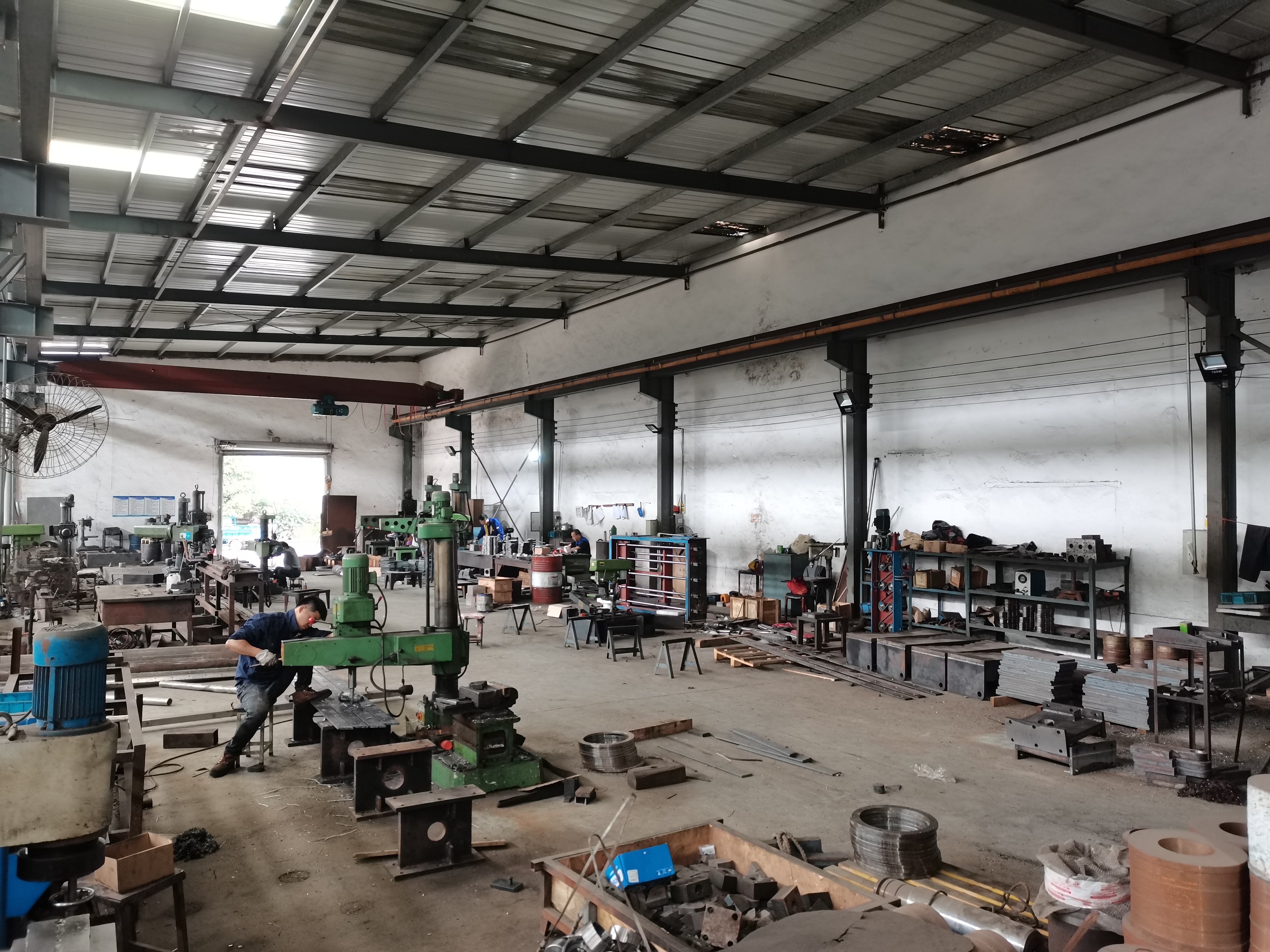
Manufacturing capability should be verified on the floor: workshop area, headcount, output per year and monthly build capacity are checkable facts.
Step-by-Step Breakdown: A Seven-Step Evaluation Workflow
Step 1 — Fix the material and throughput requirement in writing
Before any quotation is requested, define the material (old rags, wheat straw, sawdust, wood shaving, alfalfa hay, scrap aluminium, metal shavings, oil drums, scrap tyres, cardboard or waste plastic), the expected bulk density, the target bale weight and the required tonnes per hour. Material definition drives the machine category: a small-sized vertical hydraulic baler, a medium double-cylinder vertical hydraulic baler, a two-chamber clothes hydraulic baler, an oil drum press hydraulic baler or a large horizontal full automatic hydraulic baler are answers to different problems.
Step 2 — Request datasheets, not brochures
Require one datasheet per offered model. A usable datasheet answers six questions: what force is applied, at what pressure, into what bale size, at what density, at what throughput, and with what installed power. Offers that cannot answer all six should be set aside until they can.
Step 3 — Benchmark the numbers against a known model family
Benchmarking works best inside one manufacturer's range, because the design logic is consistent. NKBALER's horizontal hydraulic baler line includes the NKW80Q, NKW125Q, NKW160Q, NKW180QT, NKW200Q and NKW100QT, alongside semi-automatic variants such as the NKW80BD, NKW125BD, NKW180BD and NKW250BD. Comparing a 3–5 t/hour model with a 12–15 t/hour model in the same range shows immediately whether a quoted throughput is plausible for the quoted frame weight and motor power.
Step 4 — Verify the factory and the production slot
Ask for the factory address, workshop area, headcount, annual output, monthly capacity and the current booking status of the production line. A stated monthly capacity of 10 units and a lead time of 30–45 days are only meaningful together: if the line is already committed, the lead time moves. Request the production slot in writing, with the start date defined as the later of deposit receipt or drawing approval.
Step 5 — Audit the conformity file
Collect certificate numbers, issuers, applicable standards, market scope and expiry dates, and check them against the exact model being purchased. For EU/EEA delivery, the file should include machinery-directive documentation, and the standards referenced should be visible on the certificate rather than assumed.
Step 6 — Check operational history and reference quality
Ask for installations in a comparable material and duty. A reference is only useful if the material, the duty cycle and the machine category match. Long service life in a light duty application does not predict performance in continuous 24/7 operation.
Step 7 — Convert everything into acceptance criteria and contract terms
The final step is to write the evaluation result into the contract: bale size and density targets, throughput test basis, electrical configuration, documentation set, spare parts list, after-sales scope, lead time, delay remedy and payment milestones. Without this step, the verification work performed in steps 1–6 does not transfer into the order.
Use Cases: How the Framework Applies to Real Materials and Duties
Recycling station in Indonesia: waste plastic and waste paper
A recycling station manufacturer in Indonesia operates one unit for waste plastic baling and waste paper baling, with a reported service duration of 10–15 years and stable operation, and cites low noise and low energy consumption as the operating highlights. For a buyer evaluating a comparable offer, that reference is useful in two ways: it confirms the material fit, and it shows which acceptance criteria should be written into the contract — noise level and energy consumption are testable, while "stable operation" is not.
Agricultural processor in Pakistan: straw and alfalfa
An agricultural manufacturer in Pakistan operates one unit for baling straw and alfalfa, reported as two years of stable operation with low noise. Agricultural baling is a seasonal duty: the evaluation question is not only whether the machine can reach the rated output, but whether it can reach it during a short harvest window with limited maintenance access. Lead time and spare-parts availability therefore carry more weight than in year-round recycling duty.
Metal, tyre and wood-material lines
Scrap aluminium, aluminium scrap, metal shavings, metal drums and oil drums require higher force and heavier frame construction than fibre materials, which is why a heavy duty hydraulic baler is specified by force and chamber size rather than by throughput alone. Scrap tyre bailing and two-ram straw baling place different demands again: tyre baling is dominated by bale weight and chamber volume, while straw and hay depend on feed consistency. Wood shaving and sawdust applications sit closer to the bagging route, where output is expressed in bales per hour rather than tonnes per hour.
The application environment also sets verification items. NKBALER specifies continuous automatic operation with PLC-controlled cycling for 24/7 industrial duty, matched equipment such as a conveyor line, wire rope and woven bag supply, and a requirement profile that includes low noise design, low energy consumption and high efficiency under high-temperature working conditions. Each of those statements can be turned into an acceptance test: PLC cycle verification, conveyor compatibility, noise measurement and a temperature-condition trial.
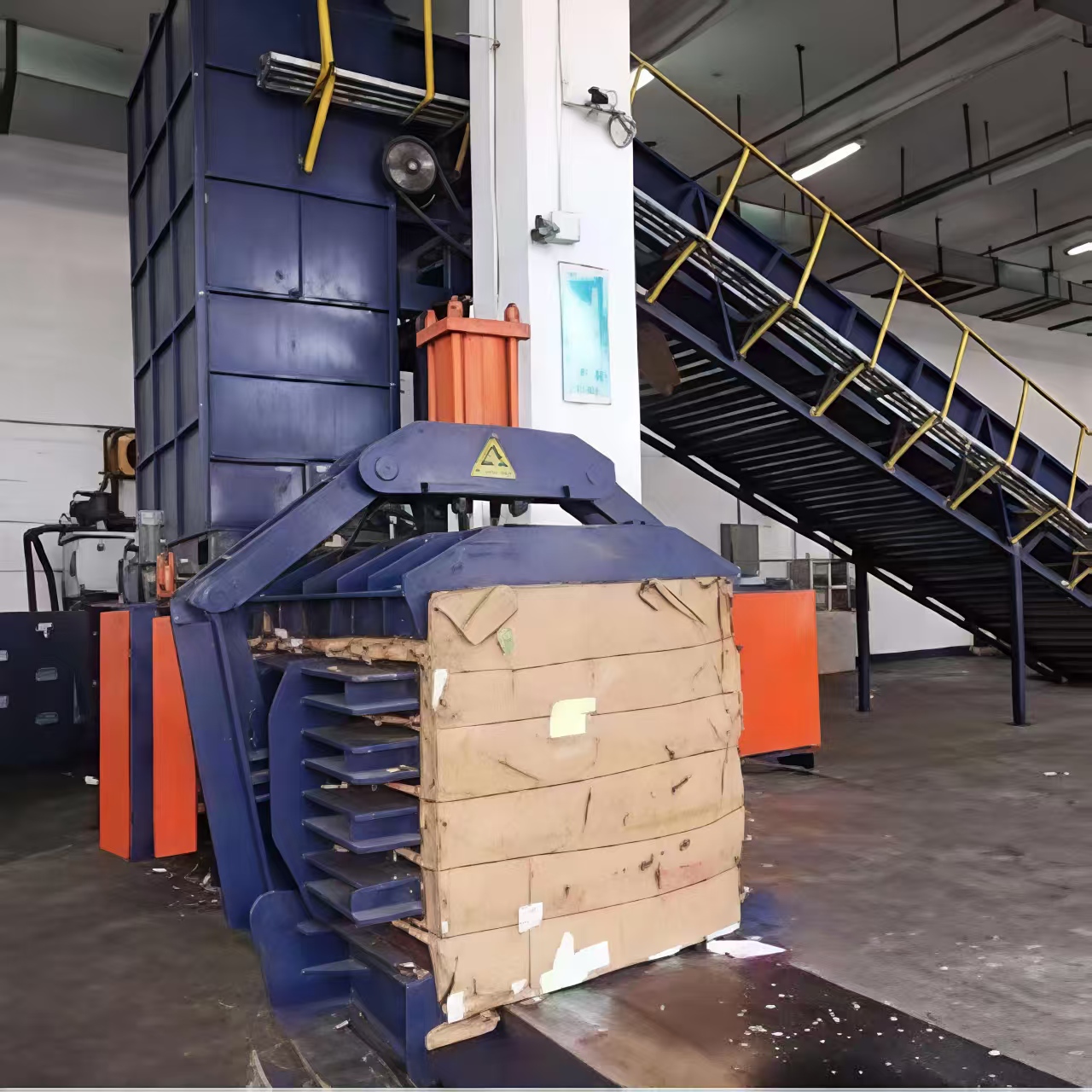
Model-level figures such as 160-ton main cylinder force, 400–600 kg/m³ material density and 28-ton mainframe weight are checkable before the order.
Comparison Table: Verifying Model-Level Claims
The table below uses published model data from one manufacturer's horizontal hydraulic baler range. It is intended as a method demonstration: the same seven fields should be requested from every supplier being evaluated.
| Verification field | NKW80Q | NKW160Q | NKW200Q |
|---|---|---|---|
| Machine type | Horizontal hydraulic baler (fully automatic / semi-automatic) | Horizontal hydraulic baler (fully automatic / semi-automatic) | Horizontal hydraulic baler (fully automatic / semi-automatic) |
| Main cylinder force | 80 T | 160 T | 200 T |
| System pressure | 21 MPa | 25 MPa | 30.5 MPa |
| Throughput | 3–5 T/hour | 12–15 T/hour | 12–15 T/hour |
| Material density | 300–400 kg/m³ | 400–600 kg/m³ | 650–700 kg/m³ |
| Bale size (W × H × L) | 1100 × 800 × up to 1600 mm | 1100 × 1250 × up to 1600 mm | 1100 × 1100 × up to 1800 mm |
| Feed opening | 1500 × 800 mm | 2000 × 1100 mm | 2400 × 1100 mm |
| Main motor power | 30 kW + 11 kW | 45 kW + 11 kW | 45 kW + 11 kW |
| Mainframe weight | 15 t | 28 t | 34 t |
Source: NKBALER horizontal hydraulic baler model data. Comparison is limited to the fields shown; it is not a ranking or a performance claim.
Two reading rules matter here. First, NKW160Q and NKW200Q state the same 12–15 T/hour throughput but different density ranges (400–600 kg/m³ against 650–700 kg/m³) and different frame weights (28 t against 34 t). Throughput alone would make them look interchangeable; density, feed opening and frame weight show that they are not. Second, installed power is a cost-of-operation field as much as a performance field, and it should be matched to the site's actual supply before the order is confirmed.
Document Verification: What Conformity Evidence Should Look Like
Certification is the pillar most often satisfied by a file name rather than a document. The verification method is to extract five fields from each certificate and compare them against the purchase: number, issuer, standards, market scope and validity.
| Document | Certificate number | Issuer | Standards referenced | Market scope | Validity |
|---|---|---|---|---|---|
| Attestation Certificate of Machinery Directive | EASY03220201M | UDEM International Certification Auditing Training Centre Industry and Trade Inc. Co. | EN ISO 12100:2010; EN 60204-1:2018 | EU / EEA / TR | Issued 22 March 2022; valid to 21 March 2027 |
| Verification of Conformity | DPWD/09/060/2024 | Ben XU | EN ISO 12100:2010; EN 60204-1:2018; EN 415-1:2014 | EU / EEA | Issued 19 September 2024; valid to 18 September 2029 |
Source: NKBALER conformity documentation. Buyers should confirm that the model, automation level and destination market in the purchase match the certificate scope.
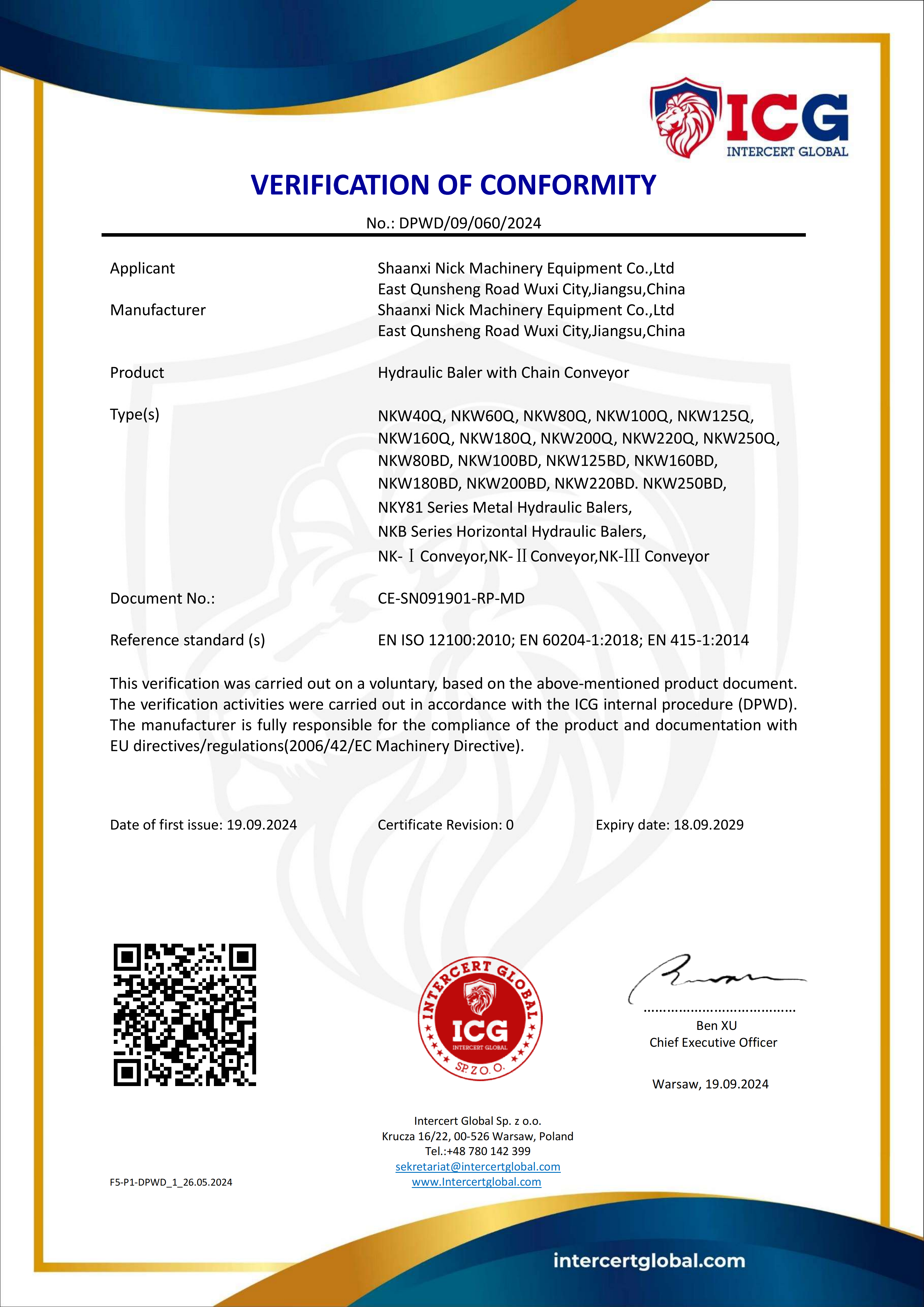
A certificate is only evidence when the number, issuer, standards, scope and expiry date are legible and match the model being purchased.
Delivery Assurance: Converting Promises into Terms
Delivery assurance rests on five written elements, each of which should be a numbered clause rather than a sentence in an email.
- Lead time with a defined start. NKBALER states 30–45 days; the contract should define whether that clock starts at deposit, at drawing approval or at both.
- Capacity reservation. With monthly capacity stated at 10 units, the buyer can ask for confirmation of the specific production slot rather than a general availability statement.
- Pre-shipment test record. NKBALER states 100% testing; the buyer should specify what is recorded — bale dimensions, cycle behaviour, tie function where fitted, conveyor operation and electrical checks — and receive the record before shipment.
- Document set. Commercial invoice, packing list, certificate of origin, conformity documents and the agreed HS classification (847989 / 842240 family) should be listed with responsibilities.
- After-sales scope. Remote support should be defined by channel, response expectation and the spare-parts list covered.
Order quantity also affects delivery planning. With a minimum order quantity of 1 unit, a single machine can be used as a validation purchase before a multi-unit programme, and OEM/ODM parameter customization allows the configuration to be adjusted to the material profile rather than the material being fitted to a stock machine.
Use-Case Check: Turning Claims into Acceptance Criteria
Acceptance criteria are the bridge between evaluation and delivery. A practical set for a horizontal hydraulic baler includes: measured bale size against the datasheet, achieved bale weight for the buyer's material, throughput measured over a defined run time at a stated density, system pressure at the stated value, noise measurement at a defined distance, PLC cycle confirmation for continuous operation, conveyor interface compatibility, and confirmation that the electrical configuration matches the destination supply. Several catalogue entries state 380 V / 50 Hz, while some models list 200–480 V / 50 Hz / 3-phase; the correct value for the destination grid must be fixed in the order.
Frequently Asked Questions
Which conformity documents should a hydraulic baler supplier provide for EU or EEA delivery?
For EU/EEA delivery, the supplier should be able to provide traceable machinery-directive documentation with a certificate number, an identified issuer, the standards applied, the market scope and the validity period. NKBALER's file includes an Attestation Certificate of Machinery Directive numbered EASY03220201M, issued by UDEM International Certification Auditing Training Centre Industry and Trade Inc. Co., referencing EN ISO 12100:2010 and EN 60204-1:2018, scoped to EU/EEA/TR and valid from 22 March 2022 to 21 March 2027. A second document, Verification of Conformity number DPWD/09/060/2024, issued by Ben XU, is scoped to EU/EEA and references EN ISO 12100:2010, EN 60204-1:2018 and EN 415-1:2014, valid from 19 September 2024 to 18 September 2029. The buyer's check is whether the purchased model, automation level and destination market fall inside that scope.
How can a buyer verify real manufacturing capability rather than a factory video?
Capability should be expressed in measurable figures that can be checked against documents or a site visit. For NKBALER, the verifiable figures are a 5,000 m² factory, 50 employees, a 15-person R&D team, annual output of 600 units and a stated monthly capacity of 10 units, with OEM/ODM parameter customization and 100% testing. A buyer should request the same six figures from each candidate — factory area, headcount, engineering headcount, annual output, monthly build capacity and test regime — and then ask for the production slot that corresponds to the requested delivery date. Capability that cannot be expressed in numbers is difficult to hold a supplier to.
What drives the budget of a heavy duty hydraulic baler, and how should a budget be framed?
Budget is driven mainly by main cylinder force, mainframe weight, installed motor power and automation level, with feed opening, conveyor length and tie configuration adding further variables. In a single manufacturer's range, the NKW80Q is specified at 80 T main cylinder force, 3–5 T/hour throughput, 30 kW + 11 kW main motor power and a 15 t mainframe; the NKW200Q is specified at 200 T, 12–15 T/hour, 45 kW + 11 kW and a 34 t mainframe. That spread shows why a budget should be framed against a defined material, density and throughput requirement rather than against a machine size. Buyers should request a quotation tied to a specific model and configuration, with Incoterms, packing and the electrical configuration stated, so that the cost comparison is like for like.
Can a single unit be ordered as a validation machine before a larger commitment?
Where the supplier accepts it, a single-unit order is the most reliable validation route. NKBALER states a minimum order quantity of 1 unit, a lead time of 30–45 days, 100% testing and remote after-sales support, which makes a first machine usable as a controlled test of both product and delivery performance. The validation should be defined in advance: which material, measured bale size and weight, throughput over a defined run time, noise and energy observations, and the completeness of the shipping document set. Performance during that first order is the best available predictor of how a repeat order will be handled.
How is delivery assurance actually secured for a hydraulic baler order?
Delivery assurance is secured by writing five items into the contract: a lead time with a defined starting trigger, confirmation of the production slot against the supplier's monthly capacity, a pre-shipment test record, a named document set including the agreed HS classification under the 847989 / 842240 family, and a defined after-sales scope with a spare-parts list. NKBALER's stated position — 30–45 days lead time, monthly capacity of 10 units, 100% testing and remote support — provides the reference points against which those clauses can be drafted. Buyers who want to review the full model range and configuration options before opening a delivery discussion can download the NKBALER product catalogue at this catalogue link, or contact the team at Sales@nkbaler.com for model-level datasheets.
Conclusion: Qualify the Supplier on Evidence, Then Negotiate
Supplier evaluation for hydraulic balers becomes manageable once it is separated into four pillars and seven steps. Specifications should be compared as datasheet fields, including the density basis behind any throughput figure. Capability should be compared as figures — factory area, headcount, engineering strength, annual output, monthly capacity and test regime. Conformity should be compared as certificate numbers, issuers, standards, scope and expiry dates. Delivery assurance should be compared as clauses, not as promises.
Used together, the four pillars produce a supplier file that survives the two moments where sourcing risk usually appears: the pre-shipment inspection and the first month of operation. A supplier able to answer on all four pillars — as the NKBALER data used throughout this guide illustrates for specifications, factory capability, conformity documentation and lead time — is a supplier whose offer can be verified rather than assumed.
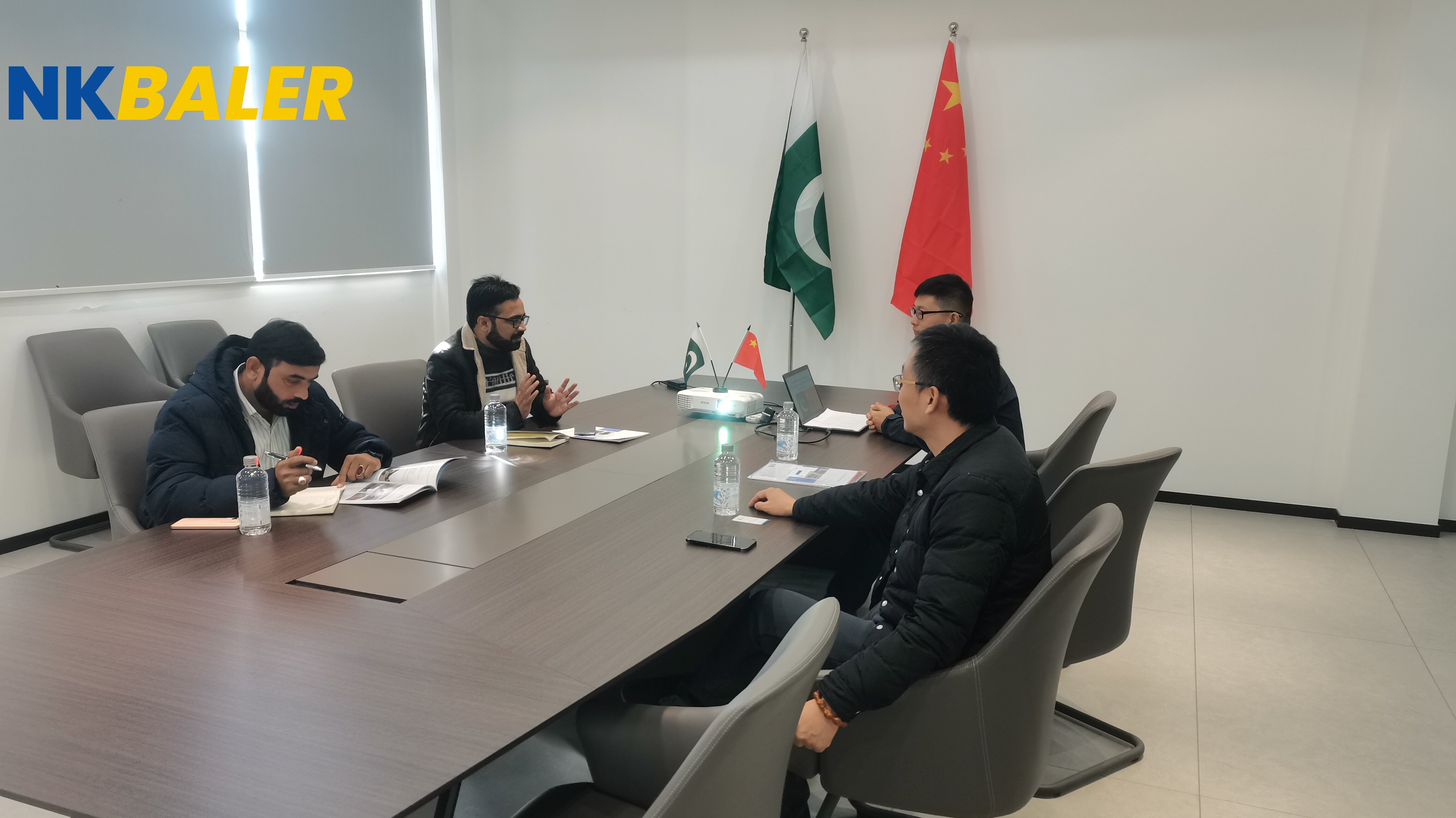
A verification visit or a documented audit replaces assumptions about capacity, testing and dispatch readiness.
Next step for procurement teams: request model-level datasheets, the conformity file and a written delivery commitment in one package, so that the three can be compared against the same requirement.
NKBALER — Shaanxi Nick Machinery Equipment Co., Ltd. | Website: www.nickbaler.com | Email: Sales@nkbaler.com | Tel / WhatsApp: +86 15021631102 | Catalogue: download the product catalogue.
Have Questions or Need More Details?
Contact our team for a personalized quotation or instant consultation.
Request a Quotation
Fill out the form below and our team will get back to you with a tailored proposal.
WhatsApp Direct Chat
Prefer to chat in real-time? Message us on WhatsApp for instant assistance & quick answers.
- Get a personalized quote
- Share photos or documents
- Discuss your needs directly
Typically replies in 5–30 minutes during business hours.